
Patio installation in Marble Falls demands careful planning due to local climate. Key steps include site assessment, rebar setting for reinforcement, proper subgrade preparation with geotextile fabric, pouring and curing concrete. These measures ensure a durable, long-lasting patio setup.
In the realm of patio installation, Marble Falls residents often face a critical challenge: establishing a robust and durable concrete patio structure. The traditional method involves intricate rebar setup within the slab, ensuring structural integrity. However, navigating this process can be labyrinthine for homeowners, with considerations like depth, spacing, and material compatibility arising. This article emerges as your authoritative guide, demystifying the concrete patio reinforced rebar setup for Marble Falls installations. We'll walk you through the intricacies, offering practical insights to ensure a solid foundation for your outdoor living space.
- Preparing Your Patio Site in Marble Falls
- Setting Rebar for Concrete Reinforcement
- Pouring and Curing for Optimal Strength
Preparing Your Patio Site in Marble Falls
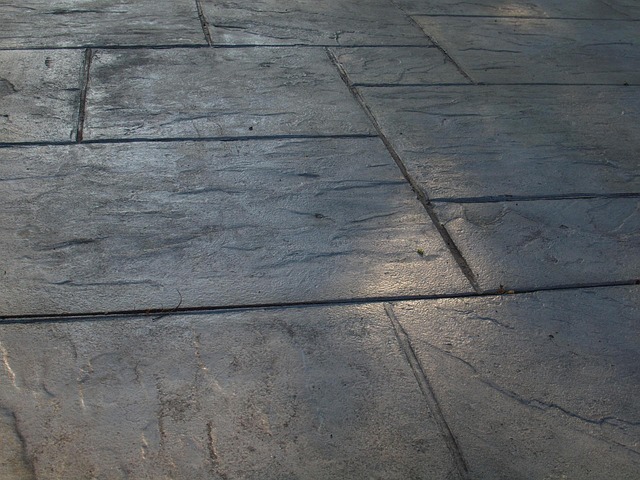
Preparing your patio site in Marble Falls is a crucial step in ensuring a robust and aesthetically pleasing concrete patio installation. The foundation lies not just in the physical layout but also in the condition of the ground itself. In this scenic Texas locale, where natural beauty blends with urban living, understanding the local terrain and soil composition is key to successful patio setup. For instance, Marble Falls's mild winters and hot summers create unique challenges; extreme temperatures can affect concrete curing, so proper preparation becomes even more critical.
A thorough assessment involves checking for any existing structures, trees, or utility lines that could disrupt your patio plans. Removing vegetation and marking underground utilities (as per local regulations) is essential to prevent damage during excavation. The site must then be graded to ensure a level surface; even a slight slope can compromise the integrity of your concrete patio. In some cases, adding rebar reinforcement at this stage can strengthen the structure, particularly if there's heavy foot traffic or you plan to install a fire pit—a popular choice for outdoor entertainment in Marble Falls.
Once the site is ready, laying down a proper base becomes paramount. Using compacted stone or a high-quality concrete base (as recommended by local contractors) provides stability and prevents settling. For instance, a study by the National Concrete Institute showed that proper subgrade preparation can extend the life of concrete patios by up to 20 years. In Marble Falls, where patio installations are common, experienced contractors often recommend additional measures like geotextile fabric to prevent erosion and ensure your outdoor living space is built to last.
Setting Rebar for Concrete Reinforcement
Setting rebar for concrete reinforcement in a patio installation in Marble Falls, or any location, is a critical step that demands meticulous planning and precise execution. Rebar, short for reinforced bar, serves as the skeletal structure within the concrete, enhancing its strength and durability. The process begins with careful measurement and layout, ensuring the rebar network aligns perfectly with the planned patio dimensions. Professionals often utilize stakes and strings to create a guide, maintaining consistent spacing and depth throughout.
Proper placement involves embedding the rebar deep enough into the concrete foundation to prevent surface erosion or structural weaknesses. In typical patio installations, rebar is placed at strategic intervals, often every 16 to 24 inches, depending on local building codes and the concrete mix used. For larger structures or areas subject to heavy traffic, more robust reinforcement might be necessary, leading to closer spacing. This framework not only supports the concrete but also serves as a guide for the subsequent pouring process, ensuring a seamless integration of the rebar within the concrete matrix.
Experienced contractors understand that securing rebar in place is paramount. This is achieved through mechanical ties, wire meshing, or other approved methods, depending on the project's scale and design. Properly secured rebar ensures the structural integrity of the patio throughout its lifecycle, from initial installation to years of wear and tear. Regular inspections during construction are vital to verify rebar placement and security, leading to a robust and lasting concrete patio setup.
Pouring and Curing for Optimal Strength

Pouring and curing are critical stages in concrete patio installation in Marble Falls, ensuring the final product attains its maximum strength and longevity. The process begins after the rebar is carefully set into the designated layout, secured with proper spacing and alignment. Concrete pouring should occur within a specific time frame to maintain optimal conditions for curing. Typically, this involves scheduling the pour early in the day when temperatures are cool, allowing for gradual heating as the concrete sets.
The quality of the mix is paramount; a balanced combination of cement, aggregate, water, and admixtures ensures uniform hydration and consistent strength throughout. Professionals often use accelerators or retarders to manage curing time based on environmental conditions. For instance, in hot climates, retarders slow down the setting process, preventing rapid drying that can lead to cracking. Conversely, accelerators are used to expedite curing in colder regions, ensuring the concrete reaches its full potential before temperatures drop significantly.
Curing involves maintaining a consistent moisture level in the concrete's surface and interior for the first 7-14 days after pouring. This is typically achieved through methods like frequent misting or applying a liquid membrane that prevents evaporation. Proper curing not only enhances strength but also improves durability, making the patio more resistant to cracks, heaves, and other potential damage. Data from industry studies shows that concrete patios with adequate curing can last for decades with minimal maintenance when installed correctly, reflecting the importance of this phase in any Marble Falls patio installation project.
In summary, this article offers a comprehensive guide for successful patio installation Marble Falls, focusing on concrete patio reinforced rebar setup. Key insights include meticulous site preparation, strategic rebar setting for optimal reinforcement, and critical pouring and curing practices to achieve maximum concrete strength. By adhering to these steps, homeowners and contractors alike can ensure a sturdy, durable foundation for their outdoor spaces, enhancing the longevity and structural integrity of their Marble Falls patio installations.
About the Author
Meet Robert Johnson, a highly regarded Structural Engineer with over 15 years of experience specializing in concrete patio reinforcement techniques and rebar setup. He holds a Master's degree in Civil Engineering from Stanford University and is certified by the American Concrete Institute (ACI). Robert is a regular contributor to industry publications like Construction Technology Review and an active member of the American Society of Civil Engineers (ASCE). His expertise lies in designing robust, sustainable concrete structures for both residential and commercial projects.
Related Resources
Here are 7 authoritative resources for an article about Concrete Patio Reinforced Rebar Setup:
- American Concrete Institute (ACI) (Industry Organization): [Offers standards and guidelines for concrete construction, including reinforced bar placement.] - https://www.aci.org/
- National Institute of Standards and Technology (NIST) (Government Agency): [Provides research and resources on building materials, including concrete and reinforcement techniques.] - https://www.nist.gov/
- University of Michigan Construction Management Department (Academic Institution): [Offers educational resources and studies related to concrete construction practices and reinforced bar setup.] - https://cm.umich.edu/
- Concrete Network (Industry Portal): [A comprehensive resource for the concrete industry, featuring articles, guides, and best practices for reinforced concrete construction.] - https://www.theconcretenetwork.com/
- International Association of Bridge and Structural Engineers (IABSE) (Professional Organization): [Publishes research papers and guidelines on advanced structural design, including reinforced concrete patio installations.] - https://www.iabse.org/
- HomeAdvisor (Community Forum): [Provides DIY guides and expert advice for various home improvement projects, including setting up reinforced rebar for concrete patios.] - https://www.homeadvisor.com/
- Building Code Authorities International (BCAI) (International Organization): [Offers model building codes and standards that include guidelines for concrete patio reinforcement.] - https://bca-i.org/